

From the Fall 2026 issue of the Isa Informer
By Lorenzo Lasater, President
It has been more than 54 years since Dad wrote The Lasater Philosophy of Cattle Raising. At the time, he was battling a severe drought in northern Mexico, and Mom encouraged him to write down the history of the Beefmaster breed and my grandfather Tom Lasater’s unique ideas behind it. In many ways, it was simply an exercise to take his mind off the brutal lack of rain./p>
What neither of them expected was the lasting impact the book would have. More than five decades later, it is now in its seventeenth printing. We still sell or give away around 30 copies every month. (If you’d like a free copy, just come visit us!) You would think that everyone interested in these ideas would have read it by now—or that the concepts would have become outdated. Instead, interest seems as strong as ever because the principles remain just as relevant to grass-based cattle production today./p>
A certain kind of cattle producer is drawn to the Six Essentials. They are usually searching for a more harmonious way to produce beef on grass. They want cattle that fit their environment, rather than forcing the environment to fit the cattle. More often than not, they are seeking a more holistic, natural approach to ranching.
Those of us who make our living from the land recognize that beef production has, in many places, drifted out of balance. Ranchers often rely heavily on improved pastures, monocultures, chemicals, irrigation, and other artificial means of producing forage. We feed more grain than nature intended. These are valuable tools when used appropriately, but they also have unintended consequences. Sometimes we forget that God managed His grasslands with massive herds of buffalo. Nature maintained its own balance, and everything benefited—including the Native Americans whose lives depended on those herds.
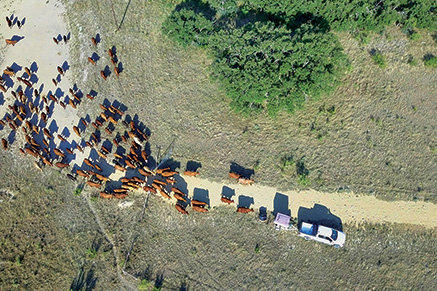 These Beefmaster cows love rotating pastures because they know fresh grass awaits them in an area that has been resting for more than three months.
At its core, ranching is about stewardship of both land and livestock. Each depends on the other for success, creating a remarkable symbiotic relationship. Healthy cattle fertilize the soil, distribute seed, stimulate plant growth, and, when properly managed, provide periods of intensive grazing followed by the rest that grasslands require to recover.
Healthy soils and healthy watersheds are ultimately what produce heavy calves and cows that breed back year after year. Those two outcomes remain the foundation of ranch profitability. Today, we seek to mimic the natural movement of buffalo through some form of planned or strategic grazing. Every operation looks different depending on its environment, infrastructure, and goals, but the principle remains the same: concentrated animal impact followed by adequate recovery.
At Isa Beefmasters, we don’t own any land. We operate entirely on leased grass. Believe me, I wish every day that we owned a large ranch, but that simply isn’t how our story unfolded.
For more than 30 years—and throughout Dad’s career before mine—leasing grass worked remarkably well. Grazing was generally available and affordable. That has changed dramatically over the past decade. Recreational land ownership—much of it centered around hunting—has increased tremendously. Many landowners who once kept livestock year-round now prefer seasonal grazing or no cattle at all. At the same time, land values and lease rates have climbed sharply.
My completely unscientific estimate is that 30 to 40 percent of Texas grazing land is now underutilized or out of livestock production. Every landowner has the right to manage their property however they choose, but the unintended consequence is often declining rangeland health. Without grazing animals, we frequently see increased erosion, invasive brush and weeds, greater wildfire fuel loads, and declining soil function. Grasslands evolved with large grazing animals, and in many situations they benefit from their presence. One only has to look at the increasing wildfire challenges across many regions where grazing has declined to recognize that excess vegetation must be managed somehow.
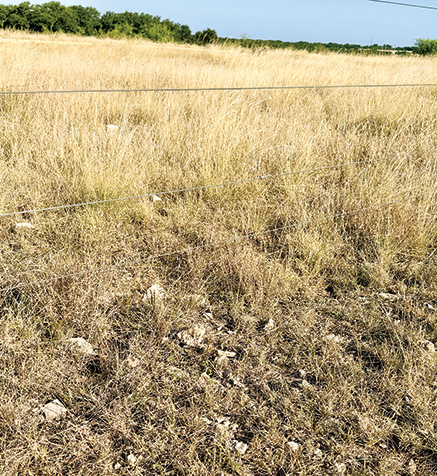 What a difference a fence makes: Quality feed awaits in the next pasture. The one we just exited will benefit from 100 days of rest and, hopefully, fall rains.
Today we operate on 12 ranches across seven Texas counties. Every place presents different grazing challenges. Many of the fences are more than 80 years old, and understandably, most landlords are reluctant to invest in new fencing. As lessees, it is difficult for us to justify that level of longterm capital investment ourselves.
This fall we are excited to begin using Halter virtual fencing collars. If the system performs as we hope, it will allow us to divide large pastures into much smaller grazing units without constructing miles of permanent fence. It should also help overcome poor fencing while allowing us to locate every animal from our phones, even in thick brush. I’ll let you know next spring how it performs in the real world.
One often-overlooked benefit of managed grazing is parasite control. Recovery periods help interrupt the life cycles of many livestock pests, including internal parasites, flies, ticks, and grubs. While rotational grazing is certainly not a complete solution, it can reduce dependence on chemical pesticides, which are widely used throughout the cattle industry. With the growing concern over the New World screwworm, grazing systems that minimize prolonged exposure to infested areas may also become another useful management tool.
Dad’s cousin Matt Brown passed away last year, but prior to his passing we were honored to purchase his registered Trueheart Beefmasters herd and lease one of his ranches.
Red Mill Ranch (pictured here) consists of 1,871 acres divided into 20 paddocks averaging less than 100 acres each. Electric fencing and strategically placed shared water points allow cattle to move efficiently through the system. The cows spend roughly five days in each paddock before moving to fresh grass, allowing every paddock to receive more than 100 days of recovery.
The results have been remarkable. Red Mill is by far the most productive ranch we manage, and the cows absolutely love it. When they hear a pickup coming, they run toward the gate because they know fresh grass is waiting on the other side.
To my earlier point, we could never have justified investing in this level of infrastructure on leased land. We are incredibly grateful that Matt did, and we are honored to continue his legacy of progressive grazing management and outstanding Beefmaster genetics.
Our family’s involvement with intensive grazing stretches back many decades. When Allan Savory first came to the United States in the late 1970s, he shared office space with Mom and Dad as they helped organize some of the earliest Holistic Resource Management seminars. His central message—that properly managed livestock can become an important tool for restoring degraded grasslands—was revolutionary then and remains highly relevant today.
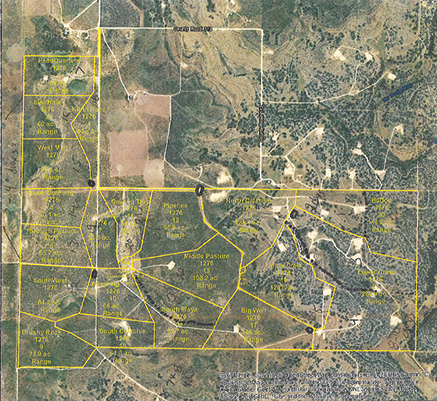 Thismap of Red Mill Ranch shows how it has been broken into 20 paddocks for rotational grazing.
During my childhood, Dad began building grazing cells across our West Texas leases, transforming large continuously grazed pastures into smaller, more manageable units. Other pioneering grazing thinkers, including Johann Zietsman and Stan Parsons, were also frequent visitors during those years.
At the time, I had no idea that these men—and Dad’s unwavering belief in the Six Essentials—would shape the way we ranch for the rest of my life. Looking back, I now realize that what Dad wrote 54 years ago wasn’t simply about breeding better cattle, it was also about learning to work with nature instead of against it. That philosophy has stood the test of time, and I believe it is more important today than ever.
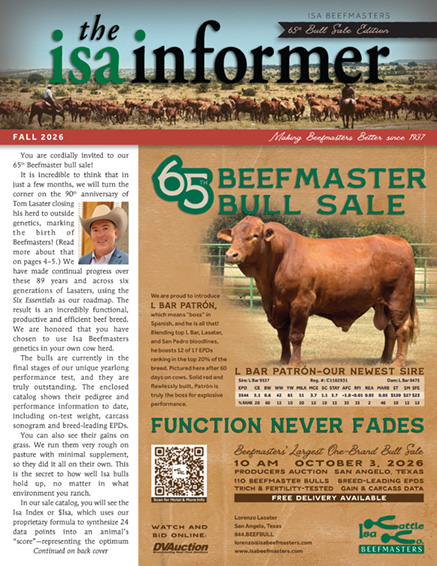
Download the Fall 2026 Informer here

Connect With Us


Powered by:
 Translate
© ISA BEEFMASTERS 1996-2024 ALL RIGHTS RESERVED.